

How to keep your dog warm and safe in winter?
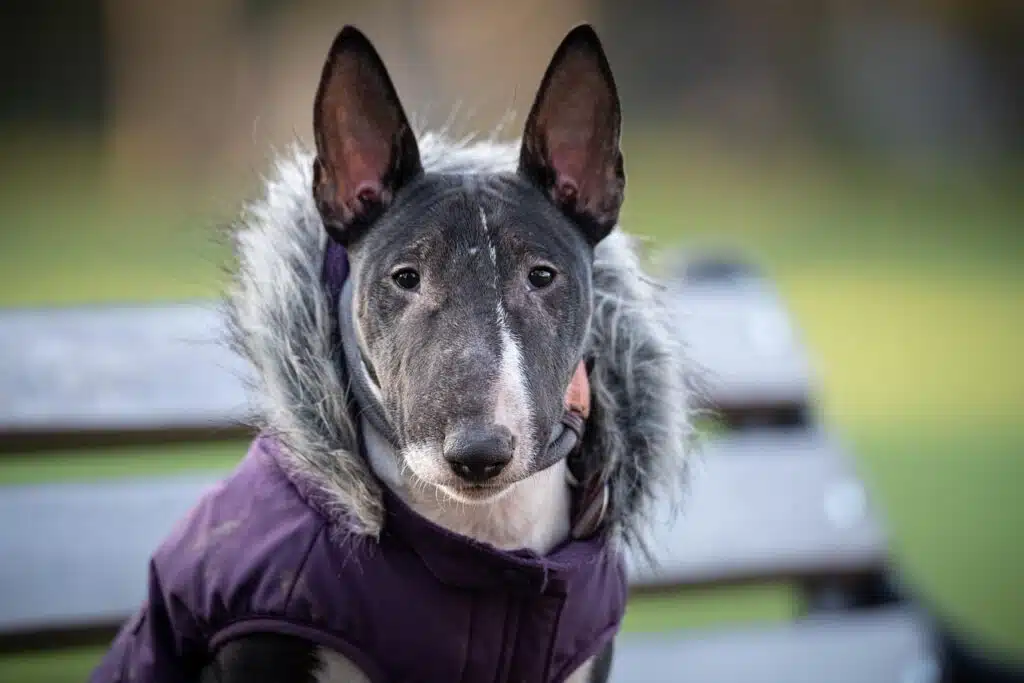
When the wind howls and snow blankets the earth, not only do we need to bundle up in thick coats, but dogs also need extra care to cope with the cold. Frostbite on ear tips, cracked paw pads, and even boredom caused by restricted movement are common winter problems. Here are some practical tips to help your dog stay warm, happy, and healthy throughout the winter.
Reduce Outdoor Time to Prevent Frostbite
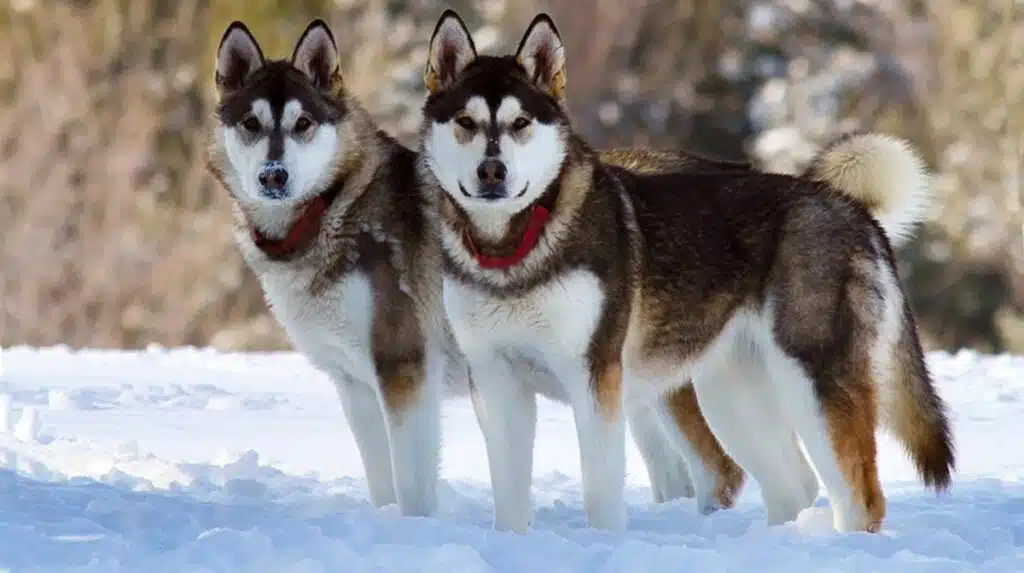
In extremely cold weather, the tips of a dog’s ears and tail are most susceptible to frostbite, especially for short-haired or small breeds. Even hardy northern breeds like Huskies can show signs of frostbite from prolonged exposure in sub-zero temperatures, such as pale or bluish skin.
During the cold winter, try to shorten walks. If you must go outside, it’s best to do so during sunny, calmer times of day. After outdoor activities, promptly check your dog’s ears and tail for any abnormalities, paying particular attention to redness, swelling, or cold, stiff skin.
Make Indoor Life More Fun

When temperatures drop sharply or snow closes roads, dogs tend to spend significantly more time indoors. Insufficient activity can lead to boredom and even restlessness.
At home, you can keep your dog interested by playing “treasure hunt,” using interactive toys, or engaging in educational training. For large breeds or high-energy dogs, simple indoor pull-string toys can provide exercise and help manage excess energy.
Appropriate clothing to help keep warm.
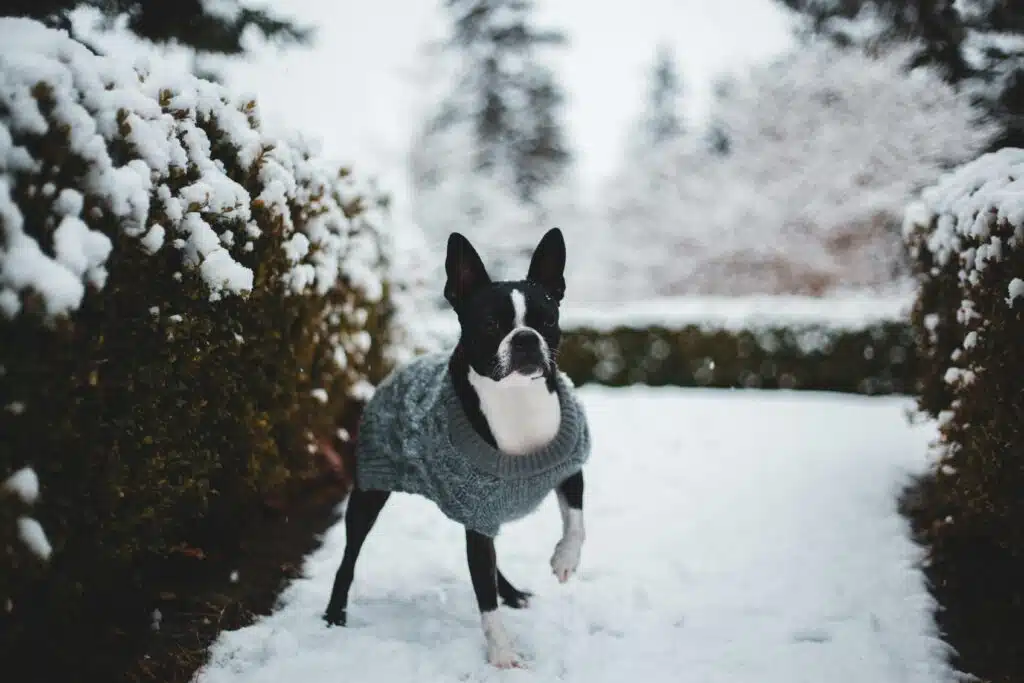
When going out in winter, a thick sweater or winter coat can provide extra warmth for your dog. Although dogs have their own fur, winter clothing is essential for short-haired dogs, small dogs, or slender breeds like greyhounds.
When choosing clothing, ensure it fits well and doesn’t restrict your dog’s movement. If the weather is particularly cold, a scarf or hat can be added, which is both practical and cute.
Pay attention to the special needs of young and older dogs
Puppies and senior dogs are especially vulnerable in winter. Their thermoregulation is poor, and they are much less tolerant of cold than adult dogs. Low temperatures can lead to reduced activity and even health problems.
Try to keep these dogs indoors in a warm environment and provide them with soft blankets or heating pads. Limit outdoor activities to a few minutes at a time to prevent them from getting cold.
Protect your dog’s paws.
If you’ve ever watched sled dog races, you’ll notice that every competing dog wears boots on its paws. This professional snow gear protects the dogs’ paw pads from cuts from ice and snow and injuries caused by the cold. Sled dog owners know that paw pad health directly impacts their dog’s performance and safety.
While your dog won’t be running hundreds of kilometers in extreme cold like a sled dog, winter ice, salt, and de-icing agents can still damage its paws. Cracked, sore, and even infected paw pads can make daily activities painful for your dog.
To protect your dog’s paws, choose soft, non-slip boots for winter outings. These boots not only insulate against the cold ground but also prevent ice chips or chemicals from irritating the paw pads. If your dog isn’t used to wearing boots, you can gradually introduce them through a trial and reward system.
Some dogs may completely resist wearing boots. In this case, apply a paw pad protectant before going out to create a barrier and prevent ice and snow from directly contacting their paws. After walking your dog, wash the paw pads with warm water, especially cleaning the salt and dirt between the toes. Gently dry them and then apply a moisturizing cream to keep the paw pads soft and prevent cracking.
Whether it’s a sled dog or a pet that’s walked daily, the health of the paw pads is crucial. Providing your dog with extra care in winter will allow them to run freely in the cold weather and enjoy carefree times.
Clean paws and avoid chemical damage.
Salt and de-icing agents on city streets can irritate a dog’s paw pads, and prolonged contact can even cause burns or cracking. After each walk, wash your dog’s paws with warm water, paying special attention to the spaces between their toes. After washing, dry them with a soft towel and apply a moisturizing cream if necessary to protect the paw pads.
While winter may be cold, with a little care, your dog can stay warm and comfortable. Remember to observe their condition regularly, and consult a veterinarian immediately if any abnormalities occur. Your care is the best guarantee for them to get through the winter.